

Last week, I received a message from my friend in our group chat. She recently got a new wheelchair and has been struggling with the adjustment process; her body is sore and it’s difficult to move in the way she needs to. She’s a writer, and even typing on her computer feels impossible right now. My heart sank when I saw her message because it feels close to home, and it wasn’t just me.
Every member of the chat, all of us women with neuromuscular disabilities, shared resounding support through heart emojis, “been there” messages, and hive-mind problem-solving. This is one of my favourite things about the disability community: how we can come together and help each other with our shared experiences and learned lessons. And, at the same time, it’s infuriating that these excruciating experiences are so common in the first place.
I’ve had my own struggles adjusting to new mobility devices over the years. In fact, the transition to my most recent wheelchair has been the hardest, taking over 3 years to complete. Watching it sit, parked in the corner of my dining room, waiting to be used, has prompted a lot of thoughts and deep reflections. The experience of getting a new mobility device as a disabled person is complex, not just systemically and physically, but also emotionally.
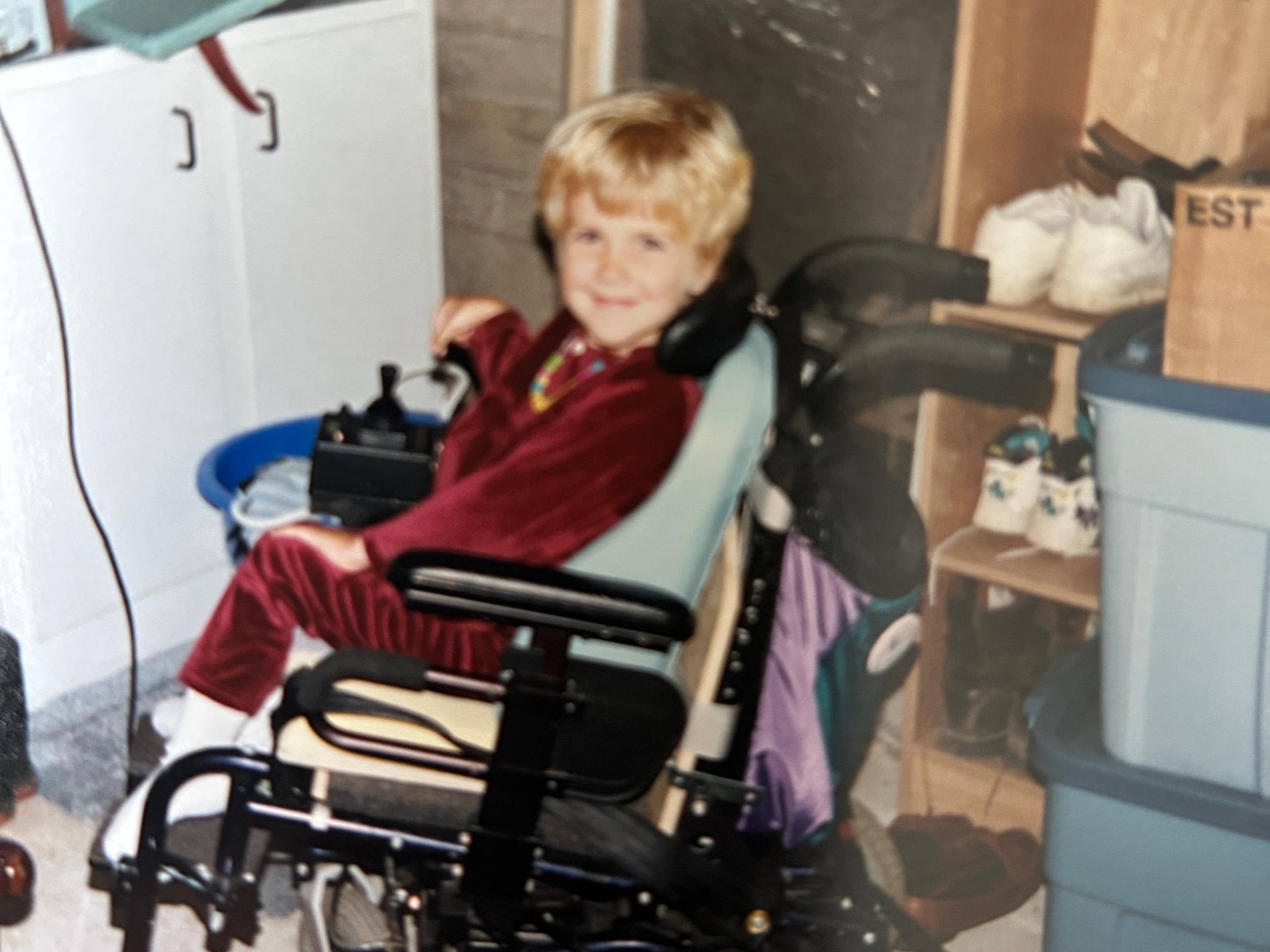
I got my first power wheelchair at 3 years old, and it was liberating from the start.
The wheelchair became an extension of my body, like a second skin, allowing me to move around without relying on someone else. This experience is difficult to capture in words, but it’s certainly not the “wheelchair-bound” narrative I repeatedly hear. The truth is wheelchairs are freedom, autonomy, and independence.
Despite this, the experience of getting a new wheelchair can be complicated. For me, the level of complexity has increased over the years for many reasons. Policy, funding, technology advances, seating support, and the progression of my disability.
When I was young, my muscles were stronger. I couldn’t walk, but I was able to hold myself up, move my arms, drive my chair, etc. And so, while the logistical process of ordering the chair came with barriers (like insurance denials claiming the device was a “luxury” item), the seating itself was fairly manageable. Things like making sure the seat is the right size, fitting cushions to support your body, and customizing the chair so you can ‘do life’ (ie. reach the sink, write at a desk, open the fridge).
As a kid, it was fairly easy for my chair to suit my needs. In just a handful of appointments, my team would find the “sweet spot” of me being physically comfortable and pain-free, while also able to move my body and function well.
However, my disability continued to progress, and things changed.
As I reached my teen years, finding this “sweet spot” became more challenging.
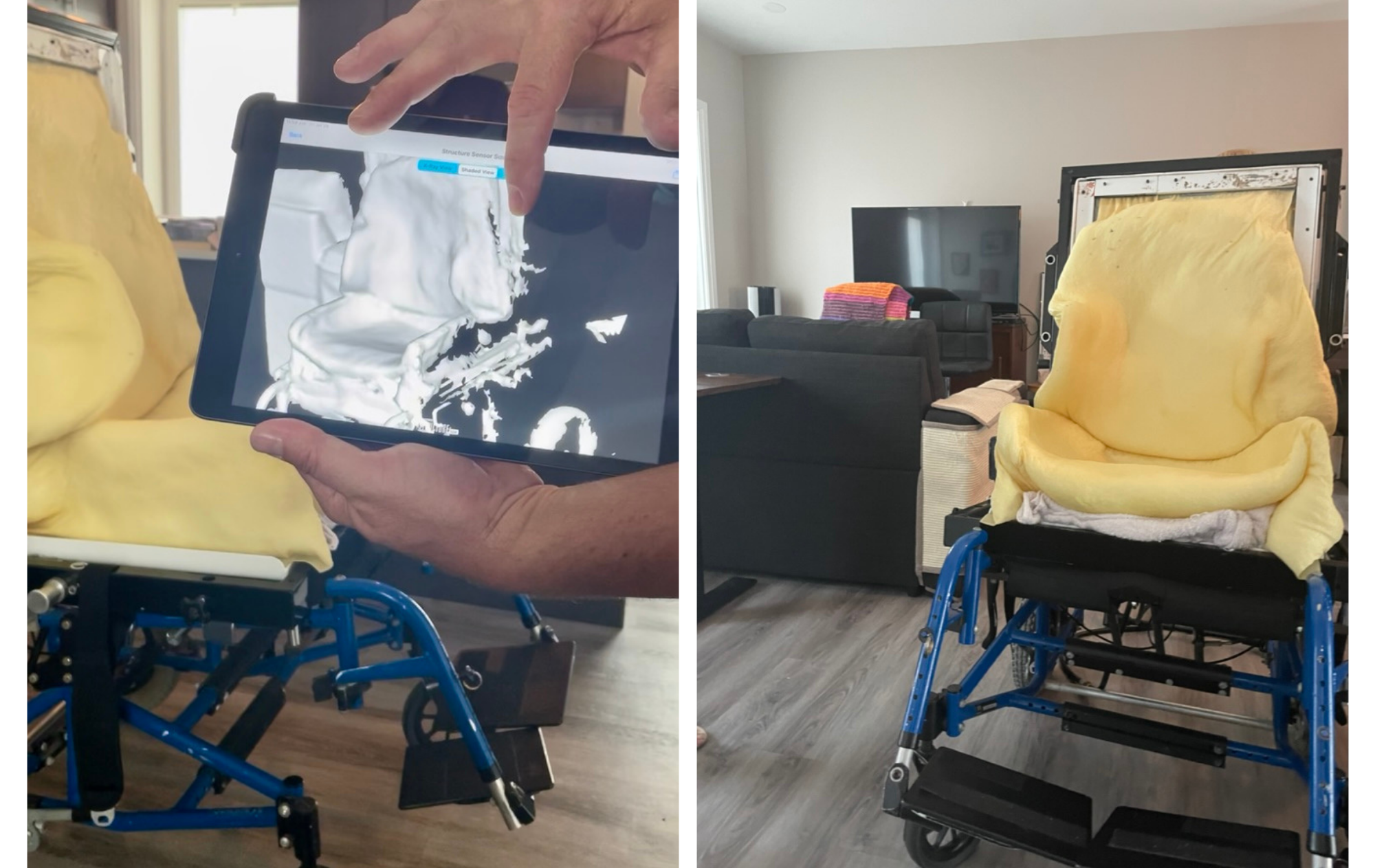
If the foam is too firm, there is soreness and risk of pressure sores. But if the foam is too soft, there’s less stability. If the headrest is pushed forward, I can turn my head side-to-side. But unless the headrest is pushed back, I can’t eat safely.
With age, I also become more aware of others and my disability, which deeply impacted the way I felt about seating appointments. I began to develop a lot of anxiety and dread beforehand.
It wasn’t the people who made me anxious. I had an incredible team of physiotherapists, occupational therapists, and technicians. They were brilliant, creative minds, with the absolute best of intentions. And still, my body would become viscerally overwhelmed the moment I entered the clinic. I moved through the halls, smelling freshly welded metal and industrial glue, and I could feel my body armouring up for what I knew came next.
From early morning to evening, I would sit in the centre of a curtained room. Out of the chair, in the chair. Twisted, turned. Pushed, pulled. I would sit on exposed foam with a terrible texture, held upright by three different sets of sweaty hands. All eyes would be on me, ready and eager to help. I would be asked a never ending stream of questions. How does it feel? How’s the pressure? What about this angle? Does this need shifted? More? Less? Worse? Better?
I’ve never questioned why the onslaught of questions came my way. The success of the appointment relied on my feedback, and I understood the assignment! I was desperate to get this right. Not only did I want a chair that felt comfortable and safe, but I recognized how excited and dedicated everyone was to making it work. I didn’t want to let them down or waste their time.
The irony was that my body was simultaneously the key and the barrier.
Things would feel uncomfortable, unfamiliar, and just plain wrong. My sensory system would be flooded, and after getting question after question, eventually the dam would break. The overwhelming pressure to feel it, and process it, and communicate it would inevitably end in a waterfall of tears.
I vividly remember breaking down at the end of a long appointment. I felt defeated and beyond frustrated with my body. As my tears slowed, my physiotherapist at the time looked at me with gentle eyes and said, “Your body is not wrong. Your body just works in millimetres, so we have to work in millimetres, too.”
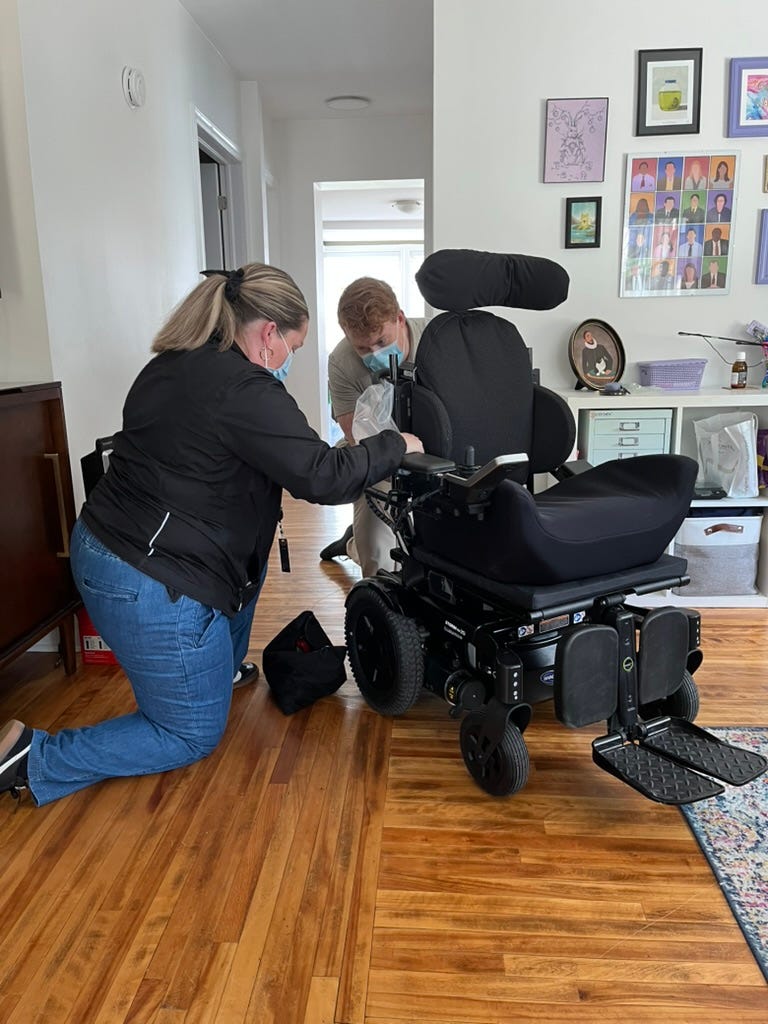
I don’t think they could have possibly known at the time how much I needed to hear these words. A reminder that my body wasn’t the problem, and it was worthy of the energy and time it took to get things right, whether that meant 5 tries or 50.
A millimetre could make the difference of being able to lift my arm, turn my head, or move my finger. A millimetre could mean being able to type on my computer, open my fridge, or hold my toothbrush.
Every millimetre matters.
Seating appointments have only become harder with age.
Healthcare services and funding sources notoriously focus on paediatrics, as though disabled kids don’t become disabled adults. The government continues to pull back on investing in disability services like physiotherapy and occupational therapy, which has led to high-turnover of clinicians and dangerously long waitlists. I know stories of people who have waited years to get simple replacement parts for their mobility devices, limiting their independence and compromising their health in the process. Health that is often already declining.
Like many adults, my disability has progressed significantly. My muscles are weaker, my body is more sensitive, and I’m pretty sure my stamina is on vacation. This has made it even harder to adjust to new seating. The “sweet spot” between comfort and function has become smaller and smaller. Sometimes I wonder if it even exists at all.
There’s grief in this, intertwined with the grief of progression; whether you have to relearn abilities or lose them altogether. A loss in function because of your disability is hard enough, let alone because your seating doesn’t fit, or the funding approval took too long, or the part you’ve always used is discontinued.
This isn’t even including the weight of the other aspects of the process, like attending constant appointments, balancing this emotional toll with the rest of your life, advocating for funding in a broken system, and finding a team of professionals who listen to you and prioritize consent.

But I think one of the most difficult parts of this entire process is that it is deeply misunderstood by a lot of people. Anytime I mention getting a new wheelchair to friends and family, usually the first response is elation.
And I get it. The prospect of getting a new mobility device that is shiny, new, and reliable does come with excitement. It represents independence and opens up new doors, like being able to get through the day without pain meds or strolling the neighbourhood without hearing a squeak with every wheel rotation.
I know this is what people are thinking of when they are excited for me, in the same way they would be excited for a new car. They think about extra costs, figuring out where buttons are, finding your blind spots, and learning the way it moves. And this is all true with a new wheelchair. But usually, a new car doesn’t come with discomfort or prolonged pain. You rarely feel like the car wasn’t built for your body, or like you are trapped in it all day long. It’s a tool to get to your destination, and then you go on about your day.
Getting a new wheelchair is more like getting a new body. And that new body can feel both hopeful and threatening.
When your old wheelchair is taken away from you, it feels like all that you know is taken away, too. It’s scary and terrifying. Will I ever feel comfortable again? Will my new chair ever feel like the second skin that my old chair did? Will it restrict me from working, getting into the community, or doing the things I love?
The uncertainty is heavy. And when this part of the experience is not recognized, it can be very lonely.
Like with so many other things for disabled people, it’s not just about the outcome, it’s about the journey to get there. For every funny story I’ve had with a past wheelchair - like an elderly stranger hearing my chair squeak a block away and declaring I’d make a terrible robber - there are reminders of loss and feelings of grief. Of losing an ability or realizing that I won’t ever be that comfortable again. But there’s also a reminder of resilience and the people that help me get through it.
We need to talk about the different emotions and experiences that disabled people have when getting new mobility devices. Yes, let’s keep pushing for supportive policies and funding our healthcare system. Yes, let’s keep creating innovative new technologies that help make this process smoother. And also, let’s have conversations around what this experience means to disabled people.
Feeling both grief and empowerment at the same time is confusing, but it’s less confusing when you know you’re not the only one.